

Purge me with hyssop, and I shall be clean;
Wash me, and I shall be whiter than snow.
–Psalm 51:7
Experiencing a whiter-than-snow Christmas isn’t just something you have to dream about.
Snow is the purest, brightest, whitest substance that exists. Anything else you would call “white” could be held up next to clean snow, and you’d have to call it “off white.” But God’s word tells us that when a dirty, dark sinner comes under the blood of Christ, God washes him even whiter than snow.
That’s how complete God’s cleansing is. It makes us whiter than the whitest. Purer than the purest. Cleaner than the cleanest things we can imagine. And that’s what we who truly celebrate Christmas from the heart have experienced.
What’s more, this is not just a surface cleaning, not just a whitewashing of the outside that leaves the inside dirty. God’s cleansing of the repentant heart is a “purging with hyssop.” Purging is complete cleansing of our souls from the inside out. When we trust in Christ, God digs deep, cleansing us to the core.
The hyssop branch was used in Old Testament times to sprinkle the altar with blood, thus purifying it. And on the cross, Jesus drank from a sponge lifted to Him on a hyssop branch. The Purest of the pure consumed our sinfulness, so that He could give us pure living water to drink and be cleansed. He who knew no sin became sin for us and our sin was crucified with Him.
Now, we who knew no righteousness have become righteousness by drinking of the cup from which flows His precious blood, that washes away all of our sin. We who were so sinful that God in His holiness was unable to look upon us have now become purer than freshly-fallen snow, glistening in the unsurpassed light of Christ’s eyes that shine upon us. As we reflect His light, we are made so spiritually bright that the sinful eyes of the unregenerated world can hardly bear to look upon us without squinting.
When we first trusted in Christ alone to save us, our hearts were baptized clean by the living water of the Word of God and the purifying fire of the Holy Spirit. The sepulchers of our carnal bodies became temples of the Holy Spirit, and now we are forever inhabited by God Himself. We are no longer ashamed, for “all who look to Him are radiant.”
Brothers and sisters, rejoice in this greatest of all miracles this Christmas, and share it with others. (When someone you know celebrates that you are having a white Christmas this year where you live, or bemoaning the fact that you aren’t, use it as an opportunity to tell them why your heart is full this Christmas regardless of the weather.)
And as the new year begins, dwell and walk each day in this greatest of all joys: The joy of being so deeply purged and cleansed that even a God of unmatched holiness finds you flawless, and wants to use your life to bring others to Him also.

Month: December 2009
A Father’s compassion

As far as the east is from the west, So far has He removed our transgressions from us.
As a father pities his children, So the LORD pities those who fear Him. For He knows our frame; He remembers that we are dust.
–Psalm 103:12-14
A few Decembers ago, I was eating lunch at a restaurant that had an “angel tree” for Christmas. As you may know, an angel tree has paper angels on it, with the names of needy children. People are asked to take an angel, buy a Christmas gift for the child, and return it to the restaurant.
As I ate, I saw a father and his little boy approach the tree. The small boy was going to pick out an angel for them to take, but as he reached out for the one of his choice, with his hand he accidentally dislodged one of the tree’s ornaments from the branch and it fell with a crash. Shards of shiny broken glass scattered across the floor.
The boy saw what he had done and immediately looked up to the face of his Dad. Pulling on his Dad’s pants leg with one hand and pointing at the shattered mess on the floor with the other, the boy said, “Sorry. Sorry. Sorry.” The tone of his voice indicated he was asking a question more than making a statement, though. “Sorry? Sorry? Sorry?”
The question the boy was asking was, “Do you forgive me? Will you make it all right, Daddy? I just messed up and I don’t know how to fix it. What do I do now? Will you fix this for me?”
In that moment, I wondered, a bit nervously, if this Dad would pass the test before him. I couldn’t help smiling when he did.
Without one unkind word or expression, the father put his hand on the boy’s shoulder to reassure him that it would be all right. His comforting look into the boys eyes completely changed the child’s demeanor in an instant. The panic over what had happened vanished from the boy’s face, and he was at peace.
Then the boy reached down to start cleaning up the mess, but his Dad held him back, saying softly, “Wait now, don’t touch. It’s sharp and it can cut you.” Then the father stooped down and began to clean up the broken pieces himself with his own hands while the boy watched.
As a father pities his child, so is the Lord’s compassion for His children.
How many times we have wanted to serve Him well and failed, only to find Him a Father who is merciful and compassionate beyond our ability to imagine. When we “fear Him” and turn to Him in our times of failure, hoping once again to find forgiveness, He always passes the test of being faithful to forgive just as He promised.
After that boy had received his father’s assurance of forgiveness, the Christmas ornament was still broken. In the same way, there are consequences for our sins. But time and time again our compassionate Father in heaven stoops down to help us deal with the consequences of the sins He has forgiven. Sometimes those consequences are sharp and they cut us. But when we let Him, He does a mighty work and cleans up the messes we can’t fix. Mending hearts shattered by our rebellion. Repairing relationships damaged by our thoughtlessness. Restoring trust that has been broken by our spiritual carelessness. Resurrecting that which we have destroyed.
And this Christmas season, we celebrate the greatest Divine stooping of all time. When God came all the way to earth, completely entering the human race Himself to take upon Himself all of the eternal consequences for our sins, that we might be forgiven, set free, and made clean and holy. Indeed, we do have a Father who is compassionate toward us.
Come and worship.
For YOU He came

Do not be afraid, for behold, I bring you good tidings of great joy which will be to all people. For there is born to you today in the city of David a Savior, who is Christ the Lord.
–Luke 2:10-11
What a proclamation! God had become a man, and it wasn’t just so He could have fellowship with the special, or the rich, or the smart, or the good-looking, or the influential, or the powerful, or the “good.” Upon His arrival, no angel went to the Pharisees to proclaim Him. King Herod had to hear about it from gentile Magi who traveled from a distant land. The Roman emperor was so caught up in counting the people under his oppression that he took no notice.
But to a group of tired, cold, overworked shepherds who stood watch over flocks in the field through the night, God sent His messengers with the word, “The Savior is here. And He has come for you.”
Two thousand anniversaries of this most blessed birth have come and gone, and still the message remains the same. It doesn’t matter if you have no prestige, no power, no popularity, and no position. The all-powerful God who created the world and everything in it has come, and He came for you. He loved you, and came to die so that you might have life eternal.
Unto you was this child born. Unto you was this Son given. Unto you the Savior calls. Come and worship.
Joy to the world, the Lord is come!
Let earth receive her King
Let every heart prepare Him room
And heaven and nature sing.
He rules the world with truth and grace
And makes the nations prove
The glories of His righteousness
And wonders of His love.
Why Bethlehem
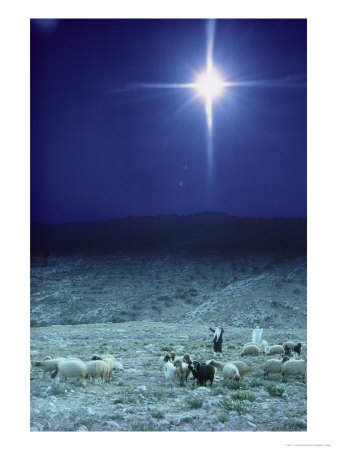
“But you, Bethlehem Ephrathah, though you are small among the clans of Judah, out of you will come for me one who will be ruler over Israel, whose origins are from of old, from ancient times.”
–Micah 5:2
That little town of Bethlehem, though insignificant in the world’s eyes, had been very significant to Biblical history, even for centuries before our precious Savior was born there.
The lineage of Christ could trace its family ties to Bethlehem as far back as the book of Genesis, for it was where Israel’s patriarch Jacob buried his wife Rachel.
When Ruth the Moabitess was brought to Israel to make Naomi’s God her own, it was in Bethlehem that she lived with her new husband Boaz, and it was there that they bore the child who would be an ancestor of Christ.
The family line was still in Bethlehem when Jesus’ ancestor David, a shepherd who would be king, watched over the flocks of his father.
David would later lead his armies against the pagan Philistines, who were establishing a stronghold over Bethlehem. Then he longed for a refreshing drink from Bethlehem’s well, and one of his “mighty men,” who was from Bethlehem, joined some others in a quest that brought him that water.
Then came the dark years. The kingdom of Israel was divided. In that moment of time, when it seemed least likely that God could bring forth His promised Redeemer from Israel, God’s prophet Micah declared that Bethlehem would be on the map again, in a way so special that generations to follow would almost forget the tiny village’s significance in Old Testament times. The previous events of Bethlehem would pale in comparison.
Because this little town of Bethlehem would be the location of the birth of the Christ child, who had existed from eternity past. Yes, the events that would change our world forever would all begin in Bethlehem. And when you look at the history of this little town, you’ll see that God couldn’t have chosen a better place.
This little village that was populated by shepherds who raised flocks for the temple sacrifices would be the birth place of the Lamb who would bring those sacrifices to their final fruition, sacrificing Himself to take away the sins of the world.
Like David, this Child of Bethlehem would be a trustworthy Shepherd for the flocks of His Father and a King whose throne in Jerusalem would be established forever.
Like Boaz, this Child of Bethlehem would be the Redeemer who purchased for Himself people of faith in Him from all nations.
It was important for the Christ child to be born in Bethlehem. So when the proper time arrived, God would take the reins of world history, working through a powerful Roman emperor who thought he was thinking for himself, just to arrange for Mary to be brought back to that little town.
There, in a poor humble stable, she would bring forth her firstborn Son, and lay Him in a manger. The eternal God, the Everlasting Father, the Prince of Peace, the All-Powerful Creator and Sustainer of the universe, would become a baby and sleep that first night on a bed of hay in Bethlehem.
“Come to Bethlehem and see Him whose birth the angels sing. Come adore on bended knee Christ the Lord, the newborn King!”
A Romanian Christmas Gospel Tract
Povestea lui Bruce –
găsindu-L pe Dumnezeul Personal
Cine este Dumnezeul meu? am întrebat. Aveam 14 ani. Cine este El? Nimeni nu mi-a răspuns, Însă m-am întrebat iar gândindu-mă – aici este biserica lui Dumnezeu şi aici este Dumnezeul despre care învăţăm la şcoală. Însă cine este Dumnezeul meu?
Nici un răspuns nu a venit din cerul îngheţat de iarnă în timp ce mergeam spre casă. Şi se părea că nimeni nu ştia răspunsul. Duminica trecută avusesem curajul de a-l întreba pe dascăl la biserică. Mi-a zâmbit larg şi mi-a zis că deja fusesem învăţat tot ce puteam şti despre Dumnezeu de către biserică. Învăţasem teologie şi religie, însă vroiam să-L cunosc pe Dumnezeu.
Tatăl meu prefera ca eu să nu mă gândesc la aşa ceva. Se uita la mine cu ochii lui albaştri şi imi zicea că pierd şi timpul meu şi al lui. Şi poate că asta făceam, mă gândeam. Nu părea să existe un Dumnezeu de cunoscut în afară de Dumnezeul feroce despre care se vorbea la biserică. Mă gândeam–acest vânt îngheţat ce-mi taie faţa este vântul Lui.
Dar de ce m-am născut? Mă gândeam. Sunt slab, miop, neîndemânatic şi ciudat. Nici măcar nu pot să joc fotbal. Când mi se pasează mingea, mă loveşte şi toţi râd de mine. Am simţit o greutate rece în stomac, la fel ca atunci când mănânci îngheţată prea repede.
Cu cât mă gândeam mai mult, judecata şi pedeapsa lui Dumnezeu păreau uşor de imaginat: pământul deschizându-se şi oamenii fiind traşi în iadul focului veşnic, iar Isus venind cu armata Lui de îngeri strălucitori şi puternici, înarmaţi cu săbii pentru a distruge întreaga creaţie datorită păcătoşeniei sale.
Mă înspăimânta să mă gândesc la Dumnezeu. Uneori când îmi pierdeam cumpătul îmi dădeam seama că făceam ceva rău şi mă gândeam: oh, Doamne, voi fi judecat.
Am început să citesc Biblia în Evanghelia după Ioan şi lucrurile au început să fie diferite. Isus nu era deloc aşa cum îmi fusese descris. Sau Îl confundam pe Isus cu Dumnezeul de care mi-era frică? În Ioan, oriunde mergea Isus, oamenii erau iubiţi şi schimbaţi de către El şi întotdeauna în mai bine. El îi iubea pe oameni cu toate că nu meritau. Şi cu toate că păcatele lor îi făceau să merite iadul, dacă îşi puneau credinţa în El, El le ierta păcatele şi le promitea viaţa veşnică.
Mă gândeam la prietenii mei cu care am mers la biserică. Am mers la biserică împreună cu ei toată viaţa mea. Îi ştiam. Ştiam că nu se schimbaseră. Nici unul dintre noi nu se schimbase. Cu toate că se vorbea mult despre schimbare. Ascultam dascălii zicând: “Trebuie să te schimbi pentru că Dumnezeu va condamna pământul şi pe păcătoşi.” Ştiam că nu eram suficient de bun pentru Dumnezeu, însă doream să-L cunosc – şi nu ştiam că El dorea să mă cunoască, să mă iubească şi să mă ierte. Aşa că mă simţeam pierdut. Atunci am citit în Biblie despre Isus, care “a venit să caute şi să-i mântuiască pe cei pierduţi.” Acest verset m-a şocat şi mi-a trimis un fior rece prin tot corpul. Ştiam dreptatea lui Dumnezeu, că El mă va judeca pe baza impurităţilor mele – însă iată aici un verset care spune că Isus a venit să mântuiască pe păcătos.
Însă cum mă va mântui? Un verset pe care l-am citit în Romani a început să prindă înţeles în mintea mea. Spunea că voi fi mântuit prin credinţă – punându-mi credinţa în Isus.
Asta-I tot? m-am gândit. Doar să cred? Nu trebuie să fac ceva măreţ? Nu ar trebui să duc o viaţă perfectă? Aceasta era ideea pe care o aveam de la biserica mea.
Apoi m-am simţit îmboldit să-I vorbesc lui Cristos. Bineînţeles că mă mai rugasem, doar formal în biserică, cu cuvintele pe care ei m-au învăţat să le spun. Însă de data asta era diferit. M-am aşezat pe pat şi am început să vorbesc cu Isus. A fost o simplă convorbire, însă a fost prima oară când am comunicat într-adevăr cu El.
“Doamne Isuse, am citit despre cum i-ai schimbat pe toţi cei de lângă tine. Vreau să fiu schimbat. Vreau pace şi împlinire şi să fiu eliberat de temerile mele. Mi-e teamă de Tine. Tu ştii că nici de mine nu-mi place. Totul este stricat în jurul meu. Şi înlăuntrul meu. Dar te rog, Dumnezeule… nu ştiu cum vei putea face ceva în mine. Dar te rog, Isuse, lasă-mă să Te cunosc. Fă-mă nou.”
Şi atunci am ştiut că am fost mântuit.
Bruce a putut experimenta aceste lucruri cu Dumnezeu şi avea o relaţie veşnică împreună cu El datorită a ceea ce Isus a făcut pentru el, pentru mine şi pentru tine. Din cauza păcatului noi suntem separaţi de Dumnezeu şi merităm să fim condamnaţi pentru toată veşnicia. Probabil că la fel ca şi Bruce, ai realizat că eşti un păcătos, aşa cum zice Biblia, Şi când vei sta în faţa lui Dumnezeu la sfârşitul acestei vieţi vei fi judecat şi condamnat. Biblia este clară că asta merităm. Însă ne învaţă de asemenea că Dumnezeu ne iubeşte atât de mult încât a făcut o cale pentru noi ca să avem păcatele iertate pentru a nu trebui să fim pedepsiţi în iad, ci pentru a putea merge în rai să fim împreună cu El şi să experimentăm o fericire veşnică.
Isus nu a păcătuit niciodată astfel încât a căpătat răsplata vieţii veşnice în rai în locul nostru. Apoi Cristos a murit pe cruce pentru noi şi a înviat din morţi.
Când Biblia spune că El a murit pentru păcatele tale, aceasta înseamnă că Isus a luat asupra Lui păcatul tău, ca şi cum El ar fi comis acest păcat; apoi L-a lăsat pe Dumnezeu Tatăl să-L pedepsească în locul tău pentru fiecare lucru rău pe care l-ai făcut sau rostit. El a luat această pedeapsă ca tu să nu fii nevoit.
Acum, crezând acest mesaj şi punându-ţi credinţa doar în Isus Cristos poţi fi mântuit de păcate, iertat şi poţi avea viaţa veşnică în rai. Însă nu trebuie să îţi pui credinţa în faptele bune pe care le-ai făcut sau în ceea ce biserica sau liderii religioşi au făcut pentru tine, ca de exemplu botezul. Trebuie să-ţi pui credinţa doar în Isus Cristos ca singura cale către cer. El este singurul care îţi poate ierta păcatele pentru că El este Cel care a dus o viaţă perfectă şi apoi a luat pedeapsa pe care o meritai pe cruce.
Şi trebuie să iei o decizie acum în această viaţă. Ori îţi pui credinţa în Isus Cristos să te mântuiască şi să-ţi dea viaţa veşnică, ori îţi pui credinţa în faptele tale bune sau în biserica ta şi apoi vei muri în păcatele tale. Dacă vei muri în păcatele tale, nu vei fi iertat, ci vei fi pedepsit pentru totdeauna. Însă pentru că Dumnezeu te iubeşte, El nu vrea să te pedepsească, ci să te ierte.
Nu vrei, ca şi Bruce, să-L laşi să facă acest lucru astăzi? Vorbeşte cu Isus în cuvintele tale. Spune-I că tu crezi că ai păcătuit împotriva Lui şi că meriţi să fii pedepsit. Spune-I că tu crezi că El te iubeşte şi că a murit pentru tine şi a înviat din morţi. Spune-I ca te încredinţezi Lui să te mântuiască, să te ierte, să te schimbe şi să-ţi dea viaţă veşnică împreună cu El. Apoi mulţumeşte-I pentru ce a făcut pentru tine.
Vrei să ştii mai multe despre o viaţă nouă în Isus Cristos? Contactează-ne astăzi. Crăciun Fericit ţie şi familiei taleşi Dumnezeu să te binecuvânteze cu o credinţă adevărată şi o relaţie cu Dumnezeul personal prin Fiul Său, Isus Cristos.
http://harul.freetzi.com/
Absolute Proof of God

The painting pictured above hangs on a wall in our home. And I have something surprising to tell you about it: No one ever painted it. It just came into existence by itself. There was no paint, no canvass, and most importantly, no painter. No one conceived the idea of what would be in the picture, and no one ever performed the action of making it. One day, the painting wasn’t, and over much time, somehow, it was.
Do you believe me?
Of course you don’t. Because what I have just told you is beyond ridiculous. You are absolutely certain that what I told you is a lie, and you are absolutely correct to be certain of that conclusion. Because you can see that the painting exists. And you know that means there was a painter. You see, this painting’s existence is not just evidence that there might have been a painter. It is absolute, undeniable proof that there was a painter. It would take a lunatic to believe that this painting might not have had a painter. Because that idea is infinitely foolish.
Likewise, you and the universe in which you live are not just evidence that there might be an intelligent Designer and Creator. They are absolute, undeniable proof that there is a Creator. Those who say they are sure God isn’t there are defending a belief system that is intellectually untenable. The non-existence of God is not even a possibility. In those moments when you doubt His existence, you are not being intellectual, and not following where the scientific evidence leads. You’re just having an emotional response to something inside of you that struggles with issues of who God is.
Maybe it’s your bad experiences with religion, which wouldn’t be surprising, because there is a lot more bad religion than good in the world. Or maybe it is your personal life, and how it hasn’t gone the way a god of your liking would have let it go. Or maybe it’s something else.
But whatever you choose to believe about God, you can be certain of this: He is there, and He is real. There simply isn’t any other possibility. Our existence is absolute proof that we were made, not just evidence that we might have been made. It would be foolish to believe those who have told you otherwise.
Once you have established for yourself the certainty that there is a God, because there simply cannot be any other logical explanation for your existence, then you have to begin a search for finding who He is, and why He made you. Millions have found the Bible a reliable source of the answers to those all-important questions, and many of those who know the Bible best will suggest you begin with the New Testament’s gospel of John
Coming soon…
Just a brief heads-up–Coming soon on this blog: Absolute proof of God’s existence.
Christmas myths
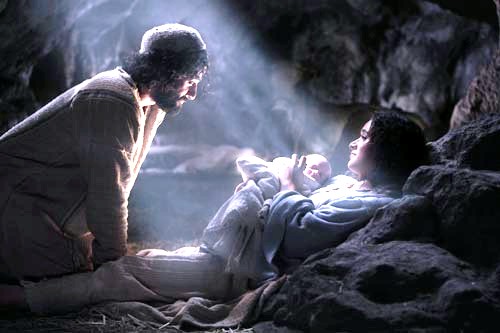 It’s almost Christmas. How well do you know the biblical story of what you’ll be celebrating? If you’re like many of us, probably not as well as you think. For example, if you had to tell the story right now, without looking anything up, would your telling of it include angels singing God’s praises before the shepherds in the field? Would any or all of these singing angels be female? Would they be flying in the sky? How about 3 kings joining the shepherds at the manger scene? Would there be a star in the sky shining a light down on the manger to guide these kings all the way to Bethlehem?
Because these things aren’t what happened. Nor are a lot more of what you’ve seen each year in your church’s Christmas program or sung about when you went a-caroling. It’s just the way we’ve told and retold the story of the Nativity, because it has become traditional to include considerable embellishment, and sometimes to even get the facts dead wrong. Don’t think so? In a moment, we’ll open our Bibles, and see.
The first time I realized how much we’ve fable-ized the story of the birth of Christ was when I was a teenager. There had been a drama at our church in which a child had met Mary and Joseph in Bethlehem, told them there wasn’t room at the inn, and helped them find the stable. Two women in the church were talking afterward, and they were upset at the perceived inaccuracy. You see, having seen many other Christmas dramas, the two ladies were certain and adamant that it was the innkeeper who had turned Mary and Joseph away–after they unsuccessfully pleaded with him for a room–telling them to go to a stable out back instead.
But if you know the Biblical account well, you already know that both the program with the kid and the renditions with an innkeeper are just dramatic license. The only thing the Bible says about it is that the baby was born and laid in a manger, because there wasn’t room at the inn. No more details. Maybe there were dozens of people without a place to stay wandering the streets when Mary and Joseph arrived. Maybe there was just a “no vancancy” sign on the front door and Joseph just improvised the best he could by taking his wife to a stable somewhere. And maybe there weren’t any animals in the stable when Mary gave birth to her Son. (If I’d been Joseph, I would have put them outside–wouldn’t you?) Who knows? But my point here is how easy it is for people to take the way they had heard the story and assume it is true, instead of reading the Bible and seeing what it really says.
Let’s look, then, just for fun, at the Christmas story, and see where we’re traditionally right, and where we’re traditionally wrong.
The biggie is probably the singing angels. I mean, everyone knows the angels sang, right? All of our songs at Christmas refer to it. And if we went to a Christmas program where the angels (all male) were only talking when the words, “Glory to God in the Highest, and on earth, peace, goodwill to men” came out of their mouths, we would feel cheated out of some good music. But read Luke 2. You’ll find that’s exactly what happened. The angels weren’t singing, but speaking. By the way, there is, in fact, no passage in the New Testament that ever refers to an angelic choir or to an angel singing. (That’s also true in Revelation 4, for example, with the angels saying together, not singing, “Holy, Holy, Holy, is the Lord God of Hosts, Who was, and is, and is to come.”)
And guess what. Our common way of telling the angels and shepherds scene isn’t just off base on the part about songs. For example, these particular angels were like men standing on the ground with the shepherds, not apparently winged creatures that flew in the sky above them. And our impression of the angels as cutesy, pretty little things is wrong. When the first angel stood there next to the shepherds, he was fearsome. They were terrified. He had to admonish them not to worry, because he was there to give them good news.
What about the 3 kings following a star to the stable and meeting the shepherds there to worship the baby Jesus together? Never happened. In fact, it’s wrong in several ways. First, they weren’t kings. They were what the Bible calls “wise men” who were practitioners of eastern religions and astrology. “Wise men” like Daniel had served with during the Old Testament Babylonian and Persian empires. Daniel’s writings about the coming King, in which Daniel even predicted how many years it would be before the Messiah came, had these wise men ready to look for Him when God gave them a star in the sky, to which they always looked for guidance anyway, to bring them there. (The biblical account also has God guiding them with dreams—the same way He had dealt with the leaders of their ancestors in Daniel’s day.)
Anyway, according to the Bible, these “three wise men,” –OOOPS. There weren’t likely 3 of them. If you read the account in Matthew 2, which does not tell us how many were in their company, you’ll actually get the impression the group was larger. The number 3 was probably inserted by the carol-writers because the Bible lists 3 gifts that the group presented to Jesus as an act of worship.
So these wise men didn’t follow a star to the manger in Bethlehem. They didn’t even know the baby was in Bethlehem. (Daniel hadn’t told them that detail.) And the star didn’t “lead them” to Israel to begin with. It just appeared in the sky as a sign for them that the King of the Jews they had read about had been born. (They already knew from Daniel’s prophecies that the time was getting close, because 33 years later that King would enter Jerusalem.)
So the wise men saw the star telling them Christ was born, and they went to Jerusalem to look for Him. In Jerusalem, they told King Herod, “We saw His star in the east and came to worship Him.” They asked Herod where He was. Herod, since he had not been wise enough to be waiting for the Messiah, knew nothing about how to answer their question. He called upon people who would know. They said the OT prophecies predicted that this baby would be born in Bethlehem. So the wise men set out for Bethlehem to “search” for Christ there. When they got to Bethlehem, they were filled with joy when they saw the star appear again. Then it guided them to where Jesus was. No longer in the stable, though. It wasn’t still the night of Jesus’ birth. The shepherds were long gone, and Mary and Joseph had found a house to live in with their baby boy.
Well, it can be fun to look at the Biblical account of Christ’s birth, and just to see where we’ve had misconceptions about it. This week, take the Bible passages yourself, and read them fresh and new. Perhaps you’ll find other ways that you had the story wrong in your mind. (I found one thing like that just this morning myself.) Read the story like you hadn’t heard it before. Picture it as something new. And worship the Christ child with new vibrancy. You’ll find the story is actually quite interesting and exciting just the way it really happened. It needs no embellishment.
Then, consider the importance of getting the story right when we tell it, through words, songs, or dramas. Christmas gives us the opportunity to proclaim the gospel to many people who other times of the year aren’t listening to Christians. Let’s not forfeit that opportunity by turning our telling of the tale into fables and myths. Let’s tell the story the way it really happened—starting and ending with the word of God—so that He can move by His power to create faith in the hearts of those who hear.
Maybe now you’re thinking, “Yeah, there are inaccuracies to what we’re saying to people in our Christmas programs, but what does it really hurt? The little details don’t matter much anyway.” But before you brush these issues aside with those thoughts, consider this: Inaccuracies in our doctrine can lead to real threats to faith.
There is, after all, one other Christmas myth, that you might not believe if you’re from an evangelical church, but it did great and lasting harm to those who accepted it—even though it seems to them to be an inaccuracy just as harmless.
They came up with the idea of presenting Mary as a woman who perpetually remained a virgin. Now, of course, this is an obvious myth, because the Bible clearly states that Joseph didn’t know Mary in a physically intimate way until Jesus was born—not that he never did. (Matt. 1:25) And all four gospels give us the detail that Mary and Joseph had several subsequent children the old-fashioned way. (At least six more kids after Jesus.)
But telling this to people who believe in the perpetual virginity, I’ve more than once seen them react with anger because they felt I was taking the beauty out of the story for them. To them, Mary staying a virgin for life means that she was something special and wonderful and virtuous—when actually it wouldn’t have been virtuous of her to never sleep with her husband. They look up to her and find Christmas to be more fun when they think of her in this way.
I’ve encountered the same reaction from evangelicals who feel I’m stealing something beautiful from their story if I tell them the angels didn’t sing or that we’re putting the wise men at the wrong time and place. But how much more beautiful, really, is the real story that we’re missing by our mis-telling! When we realize how God was bringing the wise men–gentiles like us–to worship the Christ child when King Herod wanted to kill Him? Or when it dawns on us that angels don’t sing, but that we as human beings created in God’s image can have a beautiful and unique relationship with our Creator that angels long to know—a relationship of redemption that calls us alone among His creation to the glorious privilege of worshiping Him with singing!
You see, we lose something when we mis-tell the Christmas story. And we need to realize that our misconceptions about the biblical account have consequences for the people we are mis-teaching. Just like it did for those who had what they thought was a harmless myth of Mary’s perpetual virginity. It did great harm. No longer was the virgin conceiving a child a sign that the child was great and that His Father was God, not man. This woman’s virginity instead became a false sign to them of her specialness. Eventually this resulted in their reverence and awe for her, not her Son. They came to call her not just the mother of His humanity, but the “mother of God.” They prayed to her and sought to come to God through her, imploring her to “pray for us, sinners, now and in the hour of our deaths.” Millions of people worldwide are missing out on salvation and eternal life because they find that beauty in her, and seek to come to God through her, thus not finding the only way, truth, and life, through whom we can come to the Father.
But my whole point here is that they aren’t the only ones making that mistake. Our telling of the Christmas story might be precious to us, as we watch our little girls with silver wings and halos run across the stage the Sunday night before Christmas, singing about a baby who supposedly didn’t cry. But that message is just as false as Santa Claus. And it lacks the power to save. An atheist relative who comes to church with us doesn’t have his heart challenged by the word of God to have faith that comes by hearing it. Instead it reinforces for him the idea that this stuff about Jesus is just a cute, but unbelievable story. Because the story we told him is just that.
Instead, let’s preach the word. And let the unbelievers who come in to celebrate Christmas with us hear the truth. They can be saved, if we’ll just put away the Christmas myths of our childhood, and let the word of God speak to their hearts.
God fulfilled His eternal plan, making Himself into a man like us, so He could live a perfect life in our place, and die on the cross, absorbing the punishment for our sins, and then rise again to be our Savior, giving all of us who believe eternal life and a relationship with Him. Now that’s a story worth telling, in song, drama, and spoken words.
Note: I originally wrote this article last Christmas, but am reposting it to my blog this year, since it is still relevant.
Don’t go along to get along
 After last night’s home fellowship study in Galatians, I began to feel some self-doubt, wondering if I have of late perhaps been too hard on apostate priests coming in the name of Christ and misleading people with a false gospel replacing God’s grace with religious works for justification.
God answered today during my personal devotional time in the book of Titus, which says in chapter one: “For an overseer, as God’s steward, must be above reproach…. He must hold firm to the trustworthy word as taught, so that he may be able to give instruction in sound doctrine and also to rebuke those who contradict it. For there are many who are insubordinate, empty talkers and deceivers, especially those of the circumcision party. They must be silenced, since they are upsetting whole families by teaching for shameful gain what they ought not to teach…. Therefore rebuke them sharply, that they may be sound in the faith, not devoting themselves to Jewish myths and the commands of men who turn away from the truth.”
Freedom from homosexual desire
A testimony on freedom from homosexuality, by Dennis Jernigan.
Worship at your computer
Take a few minutes in front of your computer to just worship the Lord as you watch and listen to this:
A thought on the gospel
 The gospel is all about God’s completion of all the work and our receiving His work’s benefits by our faith alone. It is all about God rescuing us, not about Him just providing a way for us to rescue ourselves. Overemphasis on the “turn from your sins” message takes the glory away from Christ that He so completely earned on the cross. That leads to boasting in the flesh, and “far be it from me that I should boast except in the cross of our Lord Jesus Christ.” (Galatians 6:14)
 Walk of Faith - Dave Bunnell