
Legalism is not a small problem. We’d be unwise to treat it like one.
Category: Commentaries on life and faith
On leading corporate worship

It surprises me when you do a search for help with worship leading online, how often you will find people who advise the worship leaders to do something like, “don’t worry about the people in the pews, just go up front, get into the music, close your eyes and worship God from the heart.”
I’m not a worship leader, as you know, but a pastor. As such, I have to correct what I think is a very misguided view on worship leading. The “just focus on yourself” advice for worship leaders would be akin to my telling a young preacher, “Don’t worry about the people in the pews; just get in the pulpit, open your Bible and talk to yourself about what God is saying to you. If you speak to the congregation at all, let it be to tell them, ‘Just open your Bible and have a quiet time of meditation with the Lord, as I do the same.'”
As a pastor, it is my job to do my private study ahead of time, and to be VERY conscious of the people in the pews as I try to teach them the word.
As a worshiper in the pews, it would be fine for me to just close my eyes and enjoy God’s presence as I sing to Him.
But when you are playing an instrument or singing at the front of the church, you are not there for yourself. You have taken on the responsibility for the people in the pews, and for leading them into the presence of the Lord to worship Him. You had better be VERY aware of them, encouraging them with your song, your eye contact, your smile, your prayers, your words of instruction and encouragement (stuff like “Sing out, now!”), and everything you are and do, to focus on the Lord. It is not about you and your one-on-one fellowship with Jesus on Sunday morning. Be worshiping alone all week to take care of that. When the pews fill up, it is time for you to function as a leader. When you are a leader, you must lead. When worship leaders just go up, close their eyes and sing to the Lord, then the only ones in the pews who worship too, are the self-led. They worship in spite of the lack of leadership. But they are few in number. Most people in the pews won’t do that. So there is absolutely no congregational unity.
A vibrant service is one where the whole of the congregation is heartily singing to the Lord, and that only happens because the leadership leads, as the Spirit of God moves on hearts that are unified in a desire to worship the Lord together as a Body, not as a group of individuals.
Astonishing
It’s astounding how people gullible enough to buy the idea that life was formed by no one’s design or intent when slime on the face of a rock was struck by lightning will be arrogant enough to call people who believe the Bible “naive” for that belief.
Absolute Proof of God

The painting pictured above hangs on a wall in our home. And I have something surprising to tell you about it: No one ever painted it. It just came into existence by itself. There was no paint, no canvass, and most importantly, no painter. No one conceived the idea of what would be in the picture, and no one ever performed the action of making it. One day, the painting wasn’t, and over much time, somehow, it was.
Do you believe me?
Of course you don’t. Because what I have just told you is beyond ridiculous. You are absolutely certain that what I told you is a lie, and you are absolutely correct to be certain of that conclusion. Because you can see that the painting exists. And you know that means there was a painter. You see, this painting’s existence is not just evidence that there might have been a painter. It is absolute, undeniable proof that there was a painter. It would take a lunatic to believe that this painting might not have had a painter. Because that idea is infinitely foolish.
Likewise, you and the universe in which you live are not just evidence that there might be an intelligent Designer and Creator. They are absolute, undeniable proof that there is a Creator. Those who say they are sure God isn’t there are defending a belief system that is intellectually untenable. The non-existence of God is not even a possibility. In those moments when you doubt His existence, you are not being intellectual, and not following where the scientific evidence leads. You’re just having an emotional response to something inside of you that struggles with issues of who God is.
Maybe it’s your bad experiences with religion, which wouldn’t be surprising, because there is a lot more bad religion than good in the world. Or maybe it is your personal life, and how it hasn’t gone the way a god of your liking would have let it go. Or maybe it’s something else.
But whatever you choose to believe about God, you can be certain of this: He is there, and He is real. There simply isn’t any other possibility. Our existence is absolute proof that we were made, not just evidence that we might have been made. It would be foolish to believe those who have told you otherwise.
Once you have established for yourself the certainty that there is a God, because there simply cannot be any other logical explanation for your existence, then you have to begin a search for finding who He is, and why He made you. Millions have found the Bible a reliable source of the answers to those all-important questions, and many of those who know the Bible best will suggest you begin with the New Testament’s gospel of John
Christmas myths
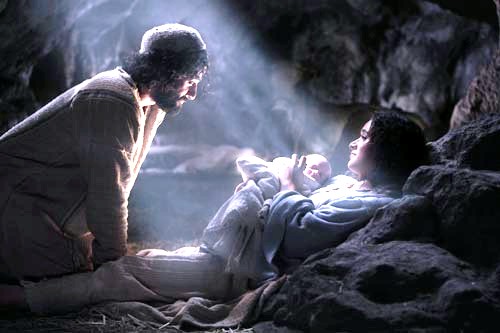 It’s almost Christmas. How well do you know the biblical story of what you’ll be celebrating? If you’re like many of us, probably not as well as you think. For example, if you had to tell the story right now, without looking anything up, would your telling of it include angels singing God’s praises before the shepherds in the field? Would any or all of these singing angels be female? Would they be flying in the sky? How about 3 kings joining the shepherds at the manger scene? Would there be a star in the sky shining a light down on the manger to guide these kings all the way to Bethlehem?
Because these things aren’t what happened. Nor are a lot more of what you’ve seen each year in your church’s Christmas program or sung about when you went a-caroling. It’s just the way we’ve told and retold the story of the Nativity, because it has become traditional to include considerable embellishment, and sometimes to even get the facts dead wrong. Don’t think so? In a moment, we’ll open our Bibles, and see.
The first time I realized how much we’ve fable-ized the story of the birth of Christ was when I was a teenager. There had been a drama at our church in which a child had met Mary and Joseph in Bethlehem, told them there wasn’t room at the inn, and helped them find the stable. Two women in the church were talking afterward, and they were upset at the perceived inaccuracy. You see, having seen many other Christmas dramas, the two ladies were certain and adamant that it was the innkeeper who had turned Mary and Joseph away–after they unsuccessfully pleaded with him for a room–telling them to go to a stable out back instead.
But if you know the Biblical account well, you already know that both the program with the kid and the renditions with an innkeeper are just dramatic license. The only thing the Bible says about it is that the baby was born and laid in a manger, because there wasn’t room at the inn. No more details. Maybe there were dozens of people without a place to stay wandering the streets when Mary and Joseph arrived. Maybe there was just a “no vancancy” sign on the front door and Joseph just improvised the best he could by taking his wife to a stable somewhere. And maybe there weren’t any animals in the stable when Mary gave birth to her Son. (If I’d been Joseph, I would have put them outside–wouldn’t you?) Who knows? But my point here is how easy it is for people to take the way they had heard the story and assume it is true, instead of reading the Bible and seeing what it really says.
Let’s look, then, just for fun, at the Christmas story, and see where we’re traditionally right, and where we’re traditionally wrong.
The biggie is probably the singing angels. I mean, everyone knows the angels sang, right? All of our songs at Christmas refer to it. And if we went to a Christmas program where the angels (all male) were only talking when the words, “Glory to God in the Highest, and on earth, peace, goodwill to men” came out of their mouths, we would feel cheated out of some good music. But read Luke 2. You’ll find that’s exactly what happened. The angels weren’t singing, but speaking. By the way, there is, in fact, no passage in the New Testament that ever refers to an angelic choir or to an angel singing. (That’s also true in Revelation 4, for example, with the angels saying together, not singing, “Holy, Holy, Holy, is the Lord God of Hosts, Who was, and is, and is to come.”)
And guess what. Our common way of telling the angels and shepherds scene isn’t just off base on the part about songs. For example, these particular angels were like men standing on the ground with the shepherds, not apparently winged creatures that flew in the sky above them. And our impression of the angels as cutesy, pretty little things is wrong. When the first angel stood there next to the shepherds, he was fearsome. They were terrified. He had to admonish them not to worry, because he was there to give them good news.
What about the 3 kings following a star to the stable and meeting the shepherds there to worship the baby Jesus together? Never happened. In fact, it’s wrong in several ways. First, they weren’t kings. They were what the Bible calls “wise men” who were practitioners of eastern religions and astrology. “Wise men” like Daniel had served with during the Old Testament Babylonian and Persian empires. Daniel’s writings about the coming King, in which Daniel even predicted how many years it would be before the Messiah came, had these wise men ready to look for Him when God gave them a star in the sky, to which they always looked for guidance anyway, to bring them there. (The biblical account also has God guiding them with dreams—the same way He had dealt with the leaders of their ancestors in Daniel’s day.)
Anyway, according to the Bible, these “three wise men,” –OOOPS. There weren’t likely 3 of them. If you read the account in Matthew 2, which does not tell us how many were in their company, you’ll actually get the impression the group was larger. The number 3 was probably inserted by the carol-writers because the Bible lists 3 gifts that the group presented to Jesus as an act of worship.
So these wise men didn’t follow a star to the manger in Bethlehem. They didn’t even know the baby was in Bethlehem. (Daniel hadn’t told them that detail.) And the star didn’t “lead them” to Israel to begin with. It just appeared in the sky as a sign for them that the King of the Jews they had read about had been born. (They already knew from Daniel’s prophecies that the time was getting close, because 33 years later that King would enter Jerusalem.)
So the wise men saw the star telling them Christ was born, and they went to Jerusalem to look for Him. In Jerusalem, they told King Herod, “We saw His star in the east and came to worship Him.” They asked Herod where He was. Herod, since he had not been wise enough to be waiting for the Messiah, knew nothing about how to answer their question. He called upon people who would know. They said the OT prophecies predicted that this baby would be born in Bethlehem. So the wise men set out for Bethlehem to “search” for Christ there. When they got to Bethlehem, they were filled with joy when they saw the star appear again. Then it guided them to where Jesus was. No longer in the stable, though. It wasn’t still the night of Jesus’ birth. The shepherds were long gone, and Mary and Joseph had found a house to live in with their baby boy.
Well, it can be fun to look at the Biblical account of Christ’s birth, and just to see where we’ve had misconceptions about it. This week, take the Bible passages yourself, and read them fresh and new. Perhaps you’ll find other ways that you had the story wrong in your mind. (I found one thing like that just this morning myself.) Read the story like you hadn’t heard it before. Picture it as something new. And worship the Christ child with new vibrancy. You’ll find the story is actually quite interesting and exciting just the way it really happened. It needs no embellishment.
Then, consider the importance of getting the story right when we tell it, through words, songs, or dramas. Christmas gives us the opportunity to proclaim the gospel to many people who other times of the year aren’t listening to Christians. Let’s not forfeit that opportunity by turning our telling of the tale into fables and myths. Let’s tell the story the way it really happened—starting and ending with the word of God—so that He can move by His power to create faith in the hearts of those who hear.
Maybe now you’re thinking, “Yeah, there are inaccuracies to what we’re saying to people in our Christmas programs, but what does it really hurt? The little details don’t matter much anyway.” But before you brush these issues aside with those thoughts, consider this: Inaccuracies in our doctrine can lead to real threats to faith.
There is, after all, one other Christmas myth, that you might not believe if you’re from an evangelical church, but it did great and lasting harm to those who accepted it—even though it seems to them to be an inaccuracy just as harmless.
They came up with the idea of presenting Mary as a woman who perpetually remained a virgin. Now, of course, this is an obvious myth, because the Bible clearly states that Joseph didn’t know Mary in a physically intimate way until Jesus was born—not that he never did. (Matt. 1:25) And all four gospels give us the detail that Mary and Joseph had several subsequent children the old-fashioned way. (At least six more kids after Jesus.)
But telling this to people who believe in the perpetual virginity, I’ve more than once seen them react with anger because they felt I was taking the beauty out of the story for them. To them, Mary staying a virgin for life means that she was something special and wonderful and virtuous—when actually it wouldn’t have been virtuous of her to never sleep with her husband. They look up to her and find Christmas to be more fun when they think of her in this way.
I’ve encountered the same reaction from evangelicals who feel I’m stealing something beautiful from their story if I tell them the angels didn’t sing or that we’re putting the wise men at the wrong time and place. But how much more beautiful, really, is the real story that we’re missing by our mis-telling! When we realize how God was bringing the wise men–gentiles like us–to worship the Christ child when King Herod wanted to kill Him? Or when it dawns on us that angels don’t sing, but that we as human beings created in God’s image can have a beautiful and unique relationship with our Creator that angels long to know—a relationship of redemption that calls us alone among His creation to the glorious privilege of worshiping Him with singing!
You see, we lose something when we mis-tell the Christmas story. And we need to realize that our misconceptions about the biblical account have consequences for the people we are mis-teaching. Just like it did for those who had what they thought was a harmless myth of Mary’s perpetual virginity. It did great harm. No longer was the virgin conceiving a child a sign that the child was great and that His Father was God, not man. This woman’s virginity instead became a false sign to them of her specialness. Eventually this resulted in their reverence and awe for her, not her Son. They came to call her not just the mother of His humanity, but the “mother of God.” They prayed to her and sought to come to God through her, imploring her to “pray for us, sinners, now and in the hour of our deaths.” Millions of people worldwide are missing out on salvation and eternal life because they find that beauty in her, and seek to come to God through her, thus not finding the only way, truth, and life, through whom we can come to the Father.
But my whole point here is that they aren’t the only ones making that mistake. Our telling of the Christmas story might be precious to us, as we watch our little girls with silver wings and halos run across the stage the Sunday night before Christmas, singing about a baby who supposedly didn’t cry. But that message is just as false as Santa Claus. And it lacks the power to save. An atheist relative who comes to church with us doesn’t have his heart challenged by the word of God to have faith that comes by hearing it. Instead it reinforces for him the idea that this stuff about Jesus is just a cute, but unbelievable story. Because the story we told him is just that.
Instead, let’s preach the word. And let the unbelievers who come in to celebrate Christmas with us hear the truth. They can be saved, if we’ll just put away the Christmas myths of our childhood, and let the word of God speak to their hearts.
God fulfilled His eternal plan, making Himself into a man like us, so He could live a perfect life in our place, and die on the cross, absorbing the punishment for our sins, and then rise again to be our Savior, giving all of us who believe eternal life and a relationship with Him. Now that’s a story worth telling, in song, drama, and spoken words.
Note: I originally wrote this article last Christmas, but am reposting it to my blog this year, since it is still relevant.
Don’t go along to get along
 After last night’s home fellowship study in Galatians, I began to feel some self-doubt, wondering if I have of late perhaps been too hard on apostate priests coming in the name of Christ and misleading people with a false gospel replacing God’s grace with religious works for justification.
God answered today during my personal devotional time in the book of Titus, which says in chapter one: “For an overseer, as God’s steward, must be above reproach…. He must hold firm to the trustworthy word as taught, so that he may be able to give instruction in sound doctrine and also to rebuke those who contradict it. For there are many who are insubordinate, empty talkers and deceivers, especially those of the circumcision party. They must be silenced, since they are upsetting whole families by teaching for shameful gain what they ought not to teach…. Therefore rebuke them sharply, that they may be sound in the faith, not devoting themselves to Jewish myths and the commands of men who turn away from the truth.”
Freedom from homosexual desire
A testimony on freedom from homosexuality, by Dennis Jernigan.
A thought on the gospel
 The gospel is all about God’s completion of all the work and our receiving His work’s benefits by our faith alone. It is all about God rescuing us, not about Him just providing a way for us to rescue ourselves. Overemphasis on the “turn from your sins” message takes the glory away from Christ that He so completely earned on the cross. That leads to boasting in the flesh, and “far be it from me that I should boast except in the cross of our Lord Jesus Christ.” (Galatians 6:14)
I wouldn’t sign it
 There’s a “Manhattan Declaration” being promoted in the US right now that is being signed by well-intentioned Christians. I just want to let you know why I wouldn’t. I am pro-life and believe in the sanctity of life and of real marriage and of the right of religious freedom. But read the whole thing–it also requires signees to agree that Roman Catholic and Eastern Orthodox leaders are, like us, followers of the Lord Jesus Christ.
It’s not politically correct to say so, and even less politically correct to write so, but it is nevertheless an unavoidable, although unfortunate, truth, to say that those churches for the most part are not followers of Jesus Christ. They follow the traditions of men and “another gospel, which is really not another.”
So, yes, I’m pro-life and pro-heterosexual marriage and pro-freedom. But even more than that, I’m pro-Jesus and pro-gospel. And I won’t compromise those core principles in an attempt to advance the principles of the right to life and liberty that flow out of those core principles.
There is no fellowship between darkness and light. Those who are not on their way to heaven for all eternity are not our brothers here on the earth, and it simply wouldn’t be true to pretend they are so, even though it causes offense to point out that truth sometimes.
If you believe I am wrong, go stand for the truths of the gospel in a place where the religious landscape is controlled by the Vatican or by Eastern orthodoxy. I’ve done both, and can assure you that it will result in shunning and persecution when you stand for the truth that salvation is by faith alone in Christ alone. I appreciate the pro-life stands of those churches, but being pro-life doesn’t save people from sins. Faith in Jesus, who died for our sins and rose again does.
Another weakness in the declaration from the born-again believer’s standpoint — it specifically calls on “unbelievers” to stand against abortion and gay marriage as foundational principles. That simply isn’t the message our Lord has commissioned us to give “unbelievers.” We’re not called to tell the lost world to “be good,” but to implore them to “believe the gospel” and “be reconciled unto God.” We are His ambassadors for this purpose.
Nonsense about God
I have a file on my computer that I call “Nonsense About God” a collection of unbiblical silly things people who don’t know God say about Him, that I keep just to make myself laugh and also to examine what the human nature expects a God they make in their own image to be. This helps me preach the true gospel in a way that the misled can understand. The facebook application “On this day, God wants you to know…” is going to quickly overflow my “nonsense about God” file, because each day it has a new thought about God that is ridiculous. For example, here is one from this week, “God wants you to know that the answers are within you. You’re chasing in the wrong field. What you are looking for is inside of you, not ‘out there’. Take a few days off to become quiet and look within, and you will find it.”
Elections
Today was round one of the presidential election in Romania, most likely with a coming runoff between the top two candidates in a couple weeks. Also being voted on, a referendum on changing the parliament from a bicameral to a unicameral (one-house) legislature, the proposed effect of which would be to make it easier for the government to do what it wants without hindrances.
As a church we’re praying for the nation and the elections, that God’s best will for the country will be done.
The benefits of being “narrow”
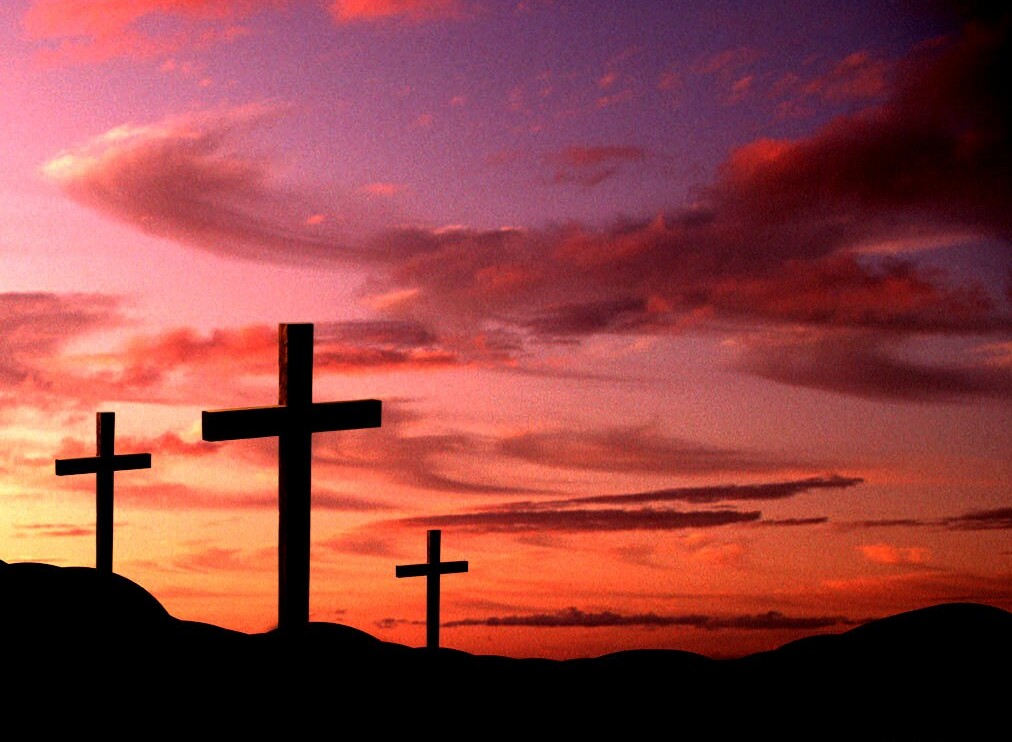 “While this truth may be familiar to you, may we emphasize it again. A holy God has the right to determine the basis upon which sinners come into His presence. God has determined that no one can find forgiveness of sins and be accepted of Him unless he receives Jesus Christ as his own Savior and trusts Him alone for salvation. To offer God anything other than the death of Jesus Christ as the basis of salvation is to offer a man-made religion. It is a ‘broad way,’ no matter what form it takes, that leads eventually to destruction. One must approach God through the gate He has opened. That gate is His crucified Son, the Lord Jesus Christ. ‘Enter in at that narrow gate.'” –Dr. J. Dwight Pentecost, in his book Design for Living
Amen to every last word of that.
 Walk of Faith - Dave Bunnell